

Analyses show that, in addition to vitamins, the oyster mushroom also contains many different minerals. For example, copper, zinc, manganese and magnesium are found in it. Valuable for health also makes it its high iron content. Observations in different regions of the world show that where Pleurotus is consumed regularly, iron deficiency is unknown.
The same applies to a lack of protein. This is because proteins make up about a quarter of the dry matter of this vital mushroom. All essential amino acids are represented, i.e. all those that the body needs but cannot produce itself. Here, however, mushrooms do not lead to a dangerous protein fattening, because they also have valuable fiber.
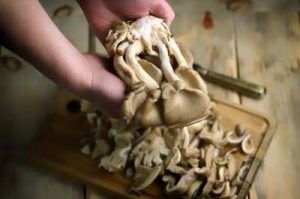 Compared to protein, oyster mushroom is rather low in fat, but still contains important unsaturated fatty acids. Carbohydrates are again abundant. Among them are various long-chain carbohydrates such as polysaccharides, which have a positive effect on the organism. Of particular note is beta glucan – a compound of polysaccharides and beta D-glucose. In research, it always surprises with various health-promoting properties. For example, it has antioxidant effects, hinders the spread of metastases and prevents Parkinson’s disease.
Compared to protein, oyster mushroom is rather low in fat, but still contains important unsaturated fatty acids. Carbohydrates are again abundant. Among them are various long-chain carbohydrates such as polysaccharides, which have a positive effect on the organism. Of particular note is beta glucan – a compound of polysaccharides and beta D-glucose. In research, it always surprises with various health-promoting properties. For example, it has antioxidant effects, hinders the spread of metastases and prevents Parkinson’s disease. 
Today’s widespread form of nutrition with lots of simple carbohydrates, few nutrients and an excess of animal products leads to metabolic problems for many people. The consequences can include cardiovascular disease, diabetes and metabolic syndrome. For this reason, vital mushrooms such as Pleurotus are extremely valuable, as they have a positive effect on fat metabolism in particular. Studies have shown that regular consumption of oyster mushrooms reduces the level of lipoprotein in the blood. Both total cholesterol and triglyceride levels decrease. In this process, the “bad” cholesterol LDL becomes less, while the “good” cholesterol HDL increases. However, medicinal mushrooms cannot replace a healthy diet!
However, the effect on fat metabolism can be seen not only in the blood: 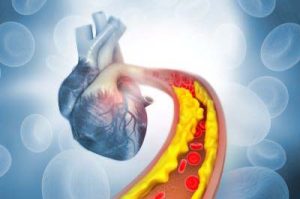 Even the fat deposits in the heart, aorta and muscles can be reduced with the help of the oyster mushroom. This is especially helpful for people who want to transition to a healthier lifestyle and lose weight. Because the fat in the muscle cells makes it enormously difficult to lose weight. It interferes with the cellular power plants (mitochondria) that are responsible for converting fat or sugar into usable energy.
Even the fat deposits in the heart, aorta and muscles can be reduced with the help of the oyster mushroom. This is especially helpful for people who want to transition to a healthier lifestyle and lose weight. Because the fat in the muscle cells makes it enormously difficult to lose weight. It interferes with the cellular power plants (mitochondria) that are responsible for converting fat or sugar into usable energy.
The oyster mushroom supports a healthy metabolism. Another positive aspect for our health is that its ingredients nourish and strengthen the intestines. Various studies in the past proved its prebiotic effect:  By taking vital mushroom powder, good intestinal bacteria such as lactobacilli, enterococci and bifidobacteria measurably increase. The immune system also benefits from this, as many cells important for the body’s defenses are formed in the intestines. It is therefore advisable to consume the oyster mushroom regularly as an adjunct to, or at the latest following, antibiotic therapy. Namely, while it supports the antibiotic effect, it simultaneously alleviates the damaging effect of the antibiotic on the intestinal flora.
A healthy intestinal environment is always accompanied by a strong nervous system. Good intestinal bacteria form short-chain fatty acids, which are enormously important for our nerves. People suffering from chronic inflammatory bowel disease may also benefit from taking Pleurotus. They are helped especially by the combination of prebiotic and anti-inflammatory effects. In both humans and animals, oyster mushroom has also proven to be a therapeutic remedy for diarrheal diseases.
By taking vital mushroom powder, good intestinal bacteria such as lactobacilli, enterococci and bifidobacteria measurably increase. The immune system also benefits from this, as many cells important for the body’s defenses are formed in the intestines. It is therefore advisable to consume the oyster mushroom regularly as an adjunct to, or at the latest following, antibiotic therapy. Namely, while it supports the antibiotic effect, it simultaneously alleviates the damaging effect of the antibiotic on the intestinal flora.
A healthy intestinal environment is always accompanied by a strong nervous system. Good intestinal bacteria form short-chain fatty acids, which are enormously important for our nerves. People suffering from chronic inflammatory bowel disease may also benefit from taking Pleurotus. They are helped especially by the combination of prebiotic and anti-inflammatory effects. In both humans and animals, oyster mushroom has also proven to be a therapeutic remedy for diarrheal diseases.
By taking vital mushroom powder, good intestinal bacteria such as lactobacilli, enterococci and bifidobacteria measurably increase. The immune system also benefits from this, as many cells important for the body’s defenses are formed in the intestines. It is therefore advisable to consume the oyster mushroom regularly as an adjunct to, or at the latest following, antibiotic therapy. Namely, while it supports the antibiotic effect, it simultaneously alleviates the damaging effect of the antibiotic on the intestinal flora.
A healthy intestinal environment is always accompanied by a strong nervous system. Good intestinal bacteria form short-chain fatty acids, which are enormously important for our nerves. People suffering from chronic inflammatory bowel disease may also benefit from taking Pleurotus. They are helped especially by the combination of prebiotic and anti-inflammatory effects. In both humans and animals, oyster mushroom has also proven to be a therapeutic remedy for diarrheal diseases.
Modern medicine has an increasing interest in finding more antibiotics of natural origin. In the meantime, there is often no antibiotic medication that is effective against resistant bacteria. Great hope in the fight against resistant germs therefore rests on remedies from nature, such as the oyster mushroom has to offer.
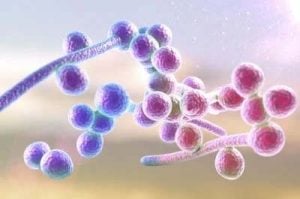 Besides its antibiotic effect, the vital mushroom inhibits the spread of candida in the body. So it is generally considered to be antimicrobial. We have already addressed its antiviral effects. Scientists believe that the ingredients of the oyster mushroom both act directly on the viruses and trigger various immune mechanisms. Its overall antiviral power has already been demonstrated in widespread viruses such as herpes simplex.
Besides its antibiotic effect, the vital mushroom inhibits the spread of candida in the body. So it is generally considered to be antimicrobial. We have already addressed its antiviral effects. Scientists believe that the ingredients of the oyster mushroom both act directly on the viruses and trigger various immune mechanisms. Its overall antiviral power has already been demonstrated in widespread viruses such as herpes simplex.
Typical for Pleurotus ostreatus is its appearance 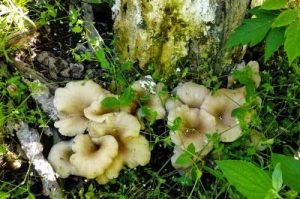 in tufted colonies. These protrude laterally from thick branches as well as tree trunks and may well grow several meters above the ground. A weakling parasite, Pleurotus also thrives well on stumps of dead trees. It can feed on conifers, but clearly prefers deciduous trees. In our latitudes, his absolute favorite tree is the copper beech.
The cap of the young oyster mushroom is usually smooth, has a whitish-bluish to slate-gray color and resembles the shape of a tongue. With age, the hat develops into a semicircle, the diameter of which can reach 25 centimeters. It also changes to a brownish color. The lamellae, spores and flesh always remain white. When you find an oyster mushroom, it is best to check the texture and smell of the flesh: while a young mushroom is soft and pleasantly fragrant, the flesh of the old mushroom is hard and musty.
The white stalk is usually less than four centimeters long, sometimes only rudimentary. There are other species of seitlings that look similar to Pleurotus, but are poisonous. Therefore, if you collect specimens yourself, you should always be absolutely sure that you are looking at the real oyster mushroom before eating it. In addition to its appearance, a distinctive feature of the edible mushroom is that it forms its fruiting body in late autumn or even in winter. Only when the thermometer drops below 5° for a certain time, the pleurotus begins to grow.
in tufted colonies. These protrude laterally from thick branches as well as tree trunks and may well grow several meters above the ground. A weakling parasite, Pleurotus also thrives well on stumps of dead trees. It can feed on conifers, but clearly prefers deciduous trees. In our latitudes, his absolute favorite tree is the copper beech.
The cap of the young oyster mushroom is usually smooth, has a whitish-bluish to slate-gray color and resembles the shape of a tongue. With age, the hat develops into a semicircle, the diameter of which can reach 25 centimeters. It also changes to a brownish color. The lamellae, spores and flesh always remain white. When you find an oyster mushroom, it is best to check the texture and smell of the flesh: while a young mushroom is soft and pleasantly fragrant, the flesh of the old mushroom is hard and musty.
The white stalk is usually less than four centimeters long, sometimes only rudimentary. There are other species of seitlings that look similar to Pleurotus, but are poisonous. Therefore, if you collect specimens yourself, you should always be absolutely sure that you are looking at the real oyster mushroom before eating it. In addition to its appearance, a distinctive feature of the edible mushroom is that it forms its fruiting body in late autumn or even in winter. Only when the thermometer drops below 5° for a certain time, the pleurotus begins to grow.
in tufted colonies. These protrude laterally from thick branches as well as tree trunks and may well grow several meters above the ground. A weakling parasite, Pleurotus also thrives well on stumps of dead trees. It can feed on conifers, but clearly prefers deciduous trees. In our latitudes, his absolute favorite tree is the copper beech.
The cap of the young oyster mushroom is usually smooth, has a whitish-bluish to slate-gray color and resembles the shape of a tongue. With age, the hat develops into a semicircle, the diameter of which can reach 25 centimeters. It also changes to a brownish color. The lamellae, spores and flesh always remain white. When you find an oyster mushroom, it is best to check the texture and smell of the flesh: while a young mushroom is soft and pleasantly fragrant, the flesh of the old mushroom is hard and musty.
The white stalk is usually less than four centimeters long, sometimes only rudimentary. There are other species of seitlings that look similar to Pleurotus, but are poisonous. Therefore, if you collect specimens yourself, you should always be absolutely sure that you are looking at the real oyster mushroom before eating it. In addition to its appearance, a distinctive feature of the edible mushroom is that it forms its fruiting body in late autumn or even in winter. Only when the thermometer drops below 5° for a certain time, the pleurotus begins to grow.
Mushrooms of the genus Pleurotus are found all over the world. The oyster mushroom in itself grows preferentially in forests of the temperate, subtropical zone. Theoretically, it thrives on quite a variety of substrates, with hardwood being its preferred medium in the wild. In breeding facilities, however, coffee grounds, straw, wheat grains, and even paper have also proven successful as a food source.
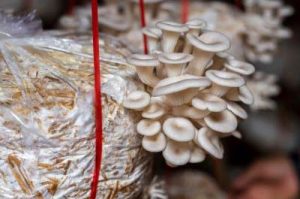 In any case, it is important that no chemicals are used. These accumulate first in the fungus and later in the consumer. Vital mushrooms from a cultivation according to German organic guidelines are therefore safest. Since Pleurotus is both a useful vital mushroom and a nutritious and tasty edible mushroom, it enjoys great popularity among cooks. After the mushroom and shiitake, it is the third most cultivated in the world.
After harvesting, the mushroom ideally dries at temperatures below 40 ° Celsius. In this way, it is preserved for a long time and its valuable ingredients are retained. Since the health substances are distributed throughout the mushroom, then the whole mushroom should also be ground into powder. By filling the powder into capsules, an even longer shelf life can be achieved. Moreover, capsules are relatively easy to dose.
In any case, it is important that no chemicals are used. These accumulate first in the fungus and later in the consumer. Vital mushrooms from a cultivation according to German organic guidelines are therefore safest. Since Pleurotus is both a useful vital mushroom and a nutritious and tasty edible mushroom, it enjoys great popularity among cooks. After the mushroom and shiitake, it is the third most cultivated in the world.
After harvesting, the mushroom ideally dries at temperatures below 40 ° Celsius. In this way, it is preserved for a long time and its valuable ingredients are retained. Since the health substances are distributed throughout the mushroom, then the whole mushroom should also be ground into powder. By filling the powder into capsules, an even longer shelf life can be achieved. Moreover, capsules are relatively easy to dose.
In any case, it is important that no chemicals are used. These accumulate first in the fungus and later in the consumer. Vital mushrooms from a cultivation according to German organic guidelines are therefore safest. Since Pleurotus is both a useful vital mushroom and a nutritious and tasty edible mushroom, it enjoys great popularity among cooks. After the mushroom and shiitake, it is the third most cultivated in the world.
After harvesting, the mushroom ideally dries at temperatures below 40 ° Celsius. In this way, it is preserved for a long time and its valuable ingredients are retained. Since the health substances are distributed throughout the mushroom, then the whole mushroom should also be ground into powder. By filling the powder into capsules, an even longer shelf life can be achieved. Moreover, capsules are relatively easy to dose.