

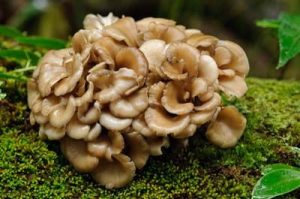
 Branches emerge from the thick stem of the maitake and become thinner and thinner. At the ends of these branches are the spatulate, thin-fleshed hats. These grow closely next to and on top of each other. The stem attaches to the side of the cap in each case. Due to the superimposed mushroom roofs, which are between two and six centimeters wide, the Maitake acts like a small sponge. Sometimes individual mushroom caps can grow up to 12 cm wide. They are always gray-brown in color and have white pores on the underside.
A cluster of several Maitake mushrooms standing close together can reach a diameter of up to 50 centimeters. To the layman, this plant on the forest floor then appears like a small bush. A single mushroom reaches a stately weight of between five and fifteen kilograms at full size. At a superficial glance, maitake looks somewhat similar to polyporus (oak hare).
Branches emerge from the thick stem of the maitake and become thinner and thinner. At the ends of these branches are the spatulate, thin-fleshed hats. These grow closely next to and on top of each other. The stem attaches to the side of the cap in each case. Due to the superimposed mushroom roofs, which are between two and six centimeters wide, the Maitake acts like a small sponge. Sometimes individual mushroom caps can grow up to 12 cm wide. They are always gray-brown in color and have white pores on the underside.
A cluster of several Maitake mushrooms standing close together can reach a diameter of up to 50 centimeters. To the layman, this plant on the forest floor then appears like a small bush. A single mushroom reaches a stately weight of between five and fifteen kilograms at full size. At a superficial glance, maitake looks somewhat similar to polyporus (oak hare). 
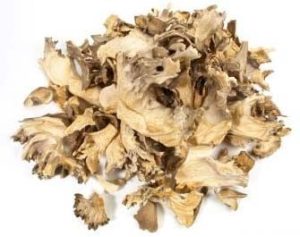 Maitake powder is usually obtained from cultivated mushrooms. For this purpose, the mushrooms are gently dried after harvesting and then carefully ground into powder. Since the unsaturated fatty acids of maitake should not come into excessive contact with oxygen, and the mushroom protein should not come into contact with moisture, the powder is usually stored in capsules and well-sealed containers. The advantage of powder over the fresh mushroom is clearly the longer shelf life, as well as easier dosage for medicinal uses. It is important for the effectiveness that the Maitake is dried at a maximum of 40° Celsius. Otherwise, many of its valuable substances are lost.
The following is a brief overview of the ingredients of maitake and their importance for human health.
Maitake powder is usually obtained from cultivated mushrooms. For this purpose, the mushrooms are gently dried after harvesting and then carefully ground into powder. Since the unsaturated fatty acids of maitake should not come into excessive contact with oxygen, and the mushroom protein should not come into contact with moisture, the powder is usually stored in capsules and well-sealed containers. The advantage of powder over the fresh mushroom is clearly the longer shelf life, as well as easier dosage for medicinal uses. It is important for the effectiveness that the Maitake is dried at a maximum of 40° Celsius. Otherwise, many of its valuable substances are lost.
The following is a brief overview of the ingredients of maitake and their importance for human health. 
EXPERIENCE REPORTS
"After two passed pneumonias, I had bronchitis, congested sinuses, low blood pressure, depression and elevated cholesterol levels. Thanks to cordyceps, shiitake and reishi, everything is eliminated. Blood levels are back to normal."
 Other polysaccharides from the maitake mushroom and their medicinal significances are …
- the X fraction: antidiabetic
- MZ-fraction: antitumoral, immunomodulatory
- MT alpha-glucan: hypoglycemic, hypolipid, antioxidant and immunomodulatory.
- Grifolan: immunomodulating
 Diabetics suffer from an elevated blood sugar level combined with a reduced uptake of sugar into the body’s cells – so-called “insulin resistance” – usually caused by malnutrition. Insulin is responsible for introducing the sugar into the cells. People with diabetes produce less insulin in the long term, while at the same time insulin sensitivity declines, so more insulin would actually be needed. Maitake supports the organism on several levels. On the one hand, it stimulates the production of insulin in the islet cells of the pancreas. At the same time, it also increases the sensitivity of cells to insulin. The F2 and F3 polysaccharides and the SX glycoprotein fraction are primarily responsible for this. Increasing sensitivity directly counteracts insulin resistance. The utilization of blood sugar by the cellular power plants improves automatically. In addition, the MT alpha-glucans contained in maitake have a direct blood sugar-lowering effect.
In addition to the mechanisms described above, the rattling sponge exerts other beneficial influences on the body that make life easier for diabetics of both type 2 and type 1. All diabetics have in common that they suffer from increased oxidative stress due to unfavorable metabolic processes. Therefore, they all benefit from the antioxidants of maitake. In addition, the medicinal mushroom promotes the body’s own antioxidant enzymes such as superoxide dismutase and glutathione peroxidase. Another property of the maitake mushroom that benefits all people with high blood sugar is the inhibition of alpha-glucosidase activity. This means that only little starch from food is converted into disaccharides. Consequently, the blood sugar level rises less strongly or not at all. This is probably caused by certain fatty acids from the vital mushroom.
 The human skeleton is relieved by the effect of Maitake on the metabolism in two respects. On the one hand, a reduction in weight, which the rattling sponge does support, always means less stress on the bones and especially the joints. In addition, abdominal fat causes mild chronic inflammation in the body, which affects the joints, among other things. If the abdominal fat decreases, the inflammation also decreases automatically. In addition, maitake also has direct anti-inflammatory ingredients.
On the other hand, maitake has a regulating effect on the body’s metabolism. Central to joint problems is uric acid. The vital mushroom not only ensures that less uric acid is formed, but also that it is excreted more. As a result, uric acid crystals are no longer deposited in the joints, where they cause inflammation and the decline of cartilage. This effect is particularly valuable for women after menopause, because their uric acid is excreted more poorly due to lower estrogen levels. The same women also benefit from the promoting influence of the maitake mushroom on the bone-forming activity of osteoblasts. Indeed, this effectively counteracts osteoporosis.
The human skeleton is relieved by the effect of Maitake on the metabolism in two respects. On the one hand, a reduction in weight, which the rattling sponge does support, always means less stress on the bones and especially the joints. In addition, abdominal fat causes mild chronic inflammation in the body, which affects the joints, among other things. If the abdominal fat decreases, the inflammation also decreases automatically. In addition, maitake also has direct anti-inflammatory ingredients.
On the other hand, maitake has a regulating effect on the body’s metabolism. Central to joint problems is uric acid. The vital mushroom not only ensures that less uric acid is formed, but also that it is excreted more. As a result, uric acid crystals are no longer deposited in the joints, where they cause inflammation and the decline of cartilage. This effect is particularly valuable for women after menopause, because their uric acid is excreted more poorly due to lower estrogen levels. The same women also benefit from the promoting influence of the maitake mushroom on the bone-forming activity of osteoblasts. Indeed, this effectively counteracts osteoporosis.  In connection with polysaccharides, we have already mentioned that they ensure healthy intestinal flora. They have a prebiotic effect and thus support the development of the intestinal environment. Improving gut health alone can alleviate ailments related to diet, he said. This benefits diabetics and people with fatty liver, for example. But the immune system is also closely related to the intestine and our defenses are stronger the healthier it is. In turn, a strong immune system plays a key role in preventing and fighting serious diseases such as cancer.
TCM has long used maitake for diarrhea and inflammation of the gastrointestinal tract. It relieves unpleasant symptoms immediately, as it has an anti-inflammatory effect and at the same time stuffs. Especially people with autoimmune-related intestinal diseases can experience significant improvements by taking Maitake capsules. Thus, on the one hand, the calming effect on the intestine helps them in general. On the other hand, they benefit from the immune-regulating abilities of the medicinal mushroom, which attenuate autoimmune reactions.
In the case of an infectious intestinal disease, the immune-supporting properties of the rattling sponge are added to the flora-promoting effect described above. Thus, the Maitake can support the regeneration. Following such an illness, it is also recommended to take the medicinal mushroom Hericium to support the reconstruction of the mucous membranes. The last benefit of maitake for the gastrointestinal tract is the antitumor effect of its beta-glucans. Among other things, they reduce the risk of cancer or polyp formation in the digestive tract.
In connection with polysaccharides, we have already mentioned that they ensure healthy intestinal flora. They have a prebiotic effect and thus support the development of the intestinal environment. Improving gut health alone can alleviate ailments related to diet, he said. This benefits diabetics and people with fatty liver, for example. But the immune system is also closely related to the intestine and our defenses are stronger the healthier it is. In turn, a strong immune system plays a key role in preventing and fighting serious diseases such as cancer.
TCM has long used maitake for diarrhea and inflammation of the gastrointestinal tract. It relieves unpleasant symptoms immediately, as it has an anti-inflammatory effect and at the same time stuffs. Especially people with autoimmune-related intestinal diseases can experience significant improvements by taking Maitake capsules. Thus, on the one hand, the calming effect on the intestine helps them in general. On the other hand, they benefit from the immune-regulating abilities of the medicinal mushroom, which attenuate autoimmune reactions.
In the case of an infectious intestinal disease, the immune-supporting properties of the rattling sponge are added to the flora-promoting effect described above. Thus, the Maitake can support the regeneration. Following such an illness, it is also recommended to take the medicinal mushroom Hericium to support the reconstruction of the mucous membranes. The last benefit of maitake for the gastrointestinal tract is the antitumor effect of its beta-glucans. Among other things, they reduce the risk of cancer or polyp formation in the digestive tract. 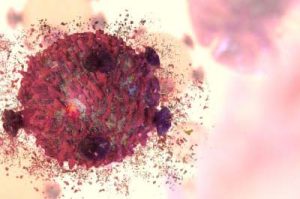 By the Maitake the immune system strengthens and, if necessary, balances the immune system, its intake prevents the development of tumors. The organism also fights an existing cancer much more efficiently with the help of the medicinal mushroom. If a cancer patient undergoes chemotherapy, maitake can support the effect of this treatment. Physicians also call such supportive substances “chemosensitizers”. But the rattling sponge is not limited to the efficiency of chemotherapy. It also improves the tolerance of the treatment. For example, it protects the mucous membranes in the digestive tract, which counteracts nausea and diarrhea. In addition, patients report that by taking maitake they feel better overall and are plagued by fatigue only to a small extent. This sensation is also often reflected in the blood count.